The Accountancy Office

How Better Bookkeeping Can Boost Profit Margins for Broadway Businesses

Running a business in Broadway comes with its own charm. The footfall, the loyal local customers, the seasonal spikes in trade. It all creates opportunity. Yet behind every successful shop, café, contractor, or service provider, there is one factor that often separates steady growth from financial struggle. That factor is bookkeeping. Most business owners do not wake up thinking about spreadsheets or reconciliations. They focus on sales, customers, and operations. But the truth is simple. Without accurate numbers, even the busiest business can quietly lose money. This is where Bookkeeping Broadway becomes more than a back-office task. It becomes a profit-driving tool.

At Accountancy Office, we have worked with businesses that believed they were doing well, only to discover hidden inefficiencies. Once their bookkeeping was corrected, their profit margins improved within months. Let us explore how this happens and why it matters for your business.

Why Profit Margins Matter More Than Revenue

Many Broadway businesses chase revenue. More sales, more customers, more growth. But revenue alone does not guarantee success. Profit margins tell the real story.

If your expenses grow faster than your income, your business is working harder for less reward. Poor bookkeeping hides this problem. Strong bookkeeping exposes it early.

When your financial records are clear and up to date, you can see

  • Where money is being spent unnecessarily
  • Which products or services are truly profitable
  • How seasonal changes affect your cash flow

This clarity gives you control. And control leads directly to higher profits.

The Real Cost of Poor Bookkeeping

It is easy to underestimate how much disorganised records can cost. Many Broadway business owners rely on basic spreadsheets or delayed entries. Some mix personal and business finances. Others leave bookkeeping until the end of the quarter.

The result is not just inconvenience. It is lost money.

Here are some common issues caused by poor bookkeeping

1. Missed Expenses

If expenses are not recorded properly, you may miss legitimate deductions. That means you end up paying more tax than necessary.

2. Cash Flow Surprises

Without real-time tracking, you may think you have more cash than you actually do. This can lead to late payments or unnecessary borrowing.

3. Pricing Mistakes

If you do not know your exact costs, you might underprice your services. This reduces your profit margin without you realising it.

4. Compliance Risks

Inaccurate records can lead to errors in tax filings. This increases the risk of penalties.

Working with experienced Accountants Broadway helps eliminate these risks before they affect your bottom line.


Accountants in Broadway


How Better Bookkeeping Directly Increases Profit Margins

Good bookkeeping is not just about keeping records. It is about using financial data to make smarter decisions.

Here is how it actively improves profitability.

Clear Visibility of Costs

When every expense is tracked correctly, patterns start to appear. You can identify

  • Suppliers that are charging more than competitors
  • Subscriptions or services you no longer need
  • Areas where small savings add up over time

Even a five percent reduction in unnecessary expenses can significantly boost your profit margin.

Smarter Pricing Decisions

Many Broadway businesses set prices based on market trends or competitors. But without knowing your exact costs, pricing becomes guesswork.

Accurate bookkeeping allows you to

  • Calculate true cost per product or service
  • Identify high-margin offerings
  • Adjust pricing confidently

This ensures you are not leaving money on the table.

Improved Cash Flow Management

Cash flow is the lifeblood of any business. Even profitable businesses can struggle if cash is not managed properly.

With professional Bookkeeping in Broadway, you gain

  • Real-time insights into incoming and outgoing funds
  • Better control over payment cycles
  • Reduced risk of late fees or overdrafts

This stability allows you to focus on growth instead of survival.

Better Financial Planning

When your records are accurate, planning becomes easier and more effective.

You can

  • Forecast future income and expenses
  • Plan investments with confidence
  • Prepare for seasonal fluctuations

This level of control helps you make decisions that increase long-term profitability.

Reduced Tax Liability

One of the biggest advantages of proper bookkeeping is tax efficiency.

Working closely with Tax Advisors in Broadway, you can

  • Claim all allowable expenses
  • Avoid costly errors in filings
  • Plan ahead for tax payments

This ensures you keep more of what you earn.

Real-Life Scenario: A Broadway Retail Shop

Consider a small retail shop in Broadway. The owner believed the business was doing well because sales were consistent. However, profits remained low.

After improving bookkeeping, several issues were identified

  • Excess inventory was tying up cash
  • Certain products had very low margins
  • Utility costs had increased without notice

By addressing these issues, the owner

  • Reduced unnecessary stock
  • Focused on high-margin items
  • Negotiated better supplier deals

Within six months, profit margins improved noticeably without increasing sales.

This is the power of accurate financial insight.

Why Local Expertise Matters

Bookkeeping is not just about numbers. It is about understanding the local business environment.

Broadway businesses face unique challenges such as

  • Seasonal tourism fluctuations
  • Local competition
  • Regional tax considerations

Working with professionals who specialise in Bookkeeping in Broadway ensures your financial strategy is tailored to your specific market.

At Accountancy Office, we combine technical expertise with local knowledge. This allows us to provide practical advice that delivers real results.

The Shift Towards Digital Bookkeeping

Modern bookkeeping has evolved. Cloud-based tools and automation have made financial management faster and more accurate.

Businesses in Broadway are increasingly adopting

  • Cloud accounting software
  • Automated expense tracking
  • Real-time financial dashboards

These tools reduce manual errors and provide instant access to key data.

However, technology alone is not enough. It needs to be managed correctly. This is where professional support becomes essential.

Signs Your Bookkeeping Needs Improvement

Not sure if your current system is holding you back? Here are some warning signs

  • You do not know your exact monthly profit
  • Tax season feels stressful and rushed
  • You rely on guesswork for financial decisions
  • Your records are not updated regularly
  • You struggle to track cash flow

If any of these sound familiar, it may be time to upgrade your approach.

How Accountancy Office Helps Broadway Businesses Grow

At Accountancy Office, we go beyond basic bookkeeping. Our goal is to help you increase profitability through better financial management.

Our services include

  • Accurate and timely record keeping
  • Cash flow monitoring and reporting
  • Expense analysis and cost reduction strategies
  • Collaboration with Accountants in Broadway for strategic advice
  • Support from experienced Tax Advisors in Broadway

Tax Advisors Broadway

We work closely with you to understand your business and provide insights that make a real difference.

The Link Between Confidence and Profit

When your finances are organised, your confidence grows. You make decisions faster. You take calculated risks. You invest in opportunities without hesitation.

This mindset shift is often overlooked, but it plays a major role in business success.

Better bookkeeping does not just improve your numbers. It changes how you run your business.

A Smarter Way Forward for Broadway Businesses

Broadway is home to hardworking entrepreneurs who take pride in what they do. Whether you run a café, a boutique, or a service-based business, your success depends on more than just sales.

It depends on how well you manage your finances.

Investing in professional Bookkeeping in Broadway is not an expense. It is a strategic move that pays for itself through improved efficiency, reduced costs, and higher profit margins.

Final Thoughts

If your goal is to grow your business, increase profits, and reduce financial stress, better bookkeeping is the place to start.

It gives you clarity. It gives you control. Most importantly, it gives you the ability to make smarter decisions every day.

At Accountancy Office, we help Broadway businesses turn their numbers into opportunities. If you are ready to take your profitability seriously, now is the time to act.

Because in business, what you do not track, you cannot improve.

The Autumn 2025 Budget Is Coming.

Here’s How To Prepare for the Autumn 2025 Budget Without Losing Your Mind

The 26th November Budget is almost here, and let’s be honest, most business owners feel that familiar knot in their stomach. Every year the rumour mill starts spinning… possible tax changes, whispers about allowances, dramatic headlines designed to spike your blood pressure before breakfast.

But here’s the truth that nobody seems to shout loudly enough, speculation means nothing.

Nothing counts until the Chancellor actually stands up and delivers the changes.

So for now, the very best thing you can do is simple. Do not panic. Prepare.

Start With Your Accounting Records

If your accounting records are behind, messy or half-updated, you’re going to struggle to understand the impact of the Budget changes when they land. Guesswork leads to stress, and stress leads to poor decisions.

When your numbers are accurate and reliable, something magical happens.

The moment the Budget is announced, you can see exactly how the changes affect you.

Not hypothetically, not roughly, but clearly and instantly.

This puts you firmly in control. 

Our Clients Will Be Fully Supported

Whatever comes out of the Budget announcement, our clients will not be navigating it alone.

We’ll break everything down in plain English, explain what actually matters, and guide you through your next steps so you know exactly where you stand.

If You’re Not a Client (Yet)… Don’t Struggle Alone

Finance and numbers are consistently the biggest stress factors for business owners.

If you find yourself staring at the Autumn 2025 Budget announcement thinking “I can’t get my head around this”, speak to your accountant. That is literally what we are here for.

And if you need a hand, I’m more than happy to help.

Focus On What You Can Control

Ignore the rumours.

Get your accounting records updated.

Be ready to plug the numbers in as soon as the real details are released.

When the Chancellor speaks on 26 November, you’ll be prepared to make decisions with a clear head, rather than reacting in blind panic.

This is how directors stay ahead. Not by guessing, but by preparing.

Making Tax Digital (MTD) and Your Accountant: What Will Change (and What Won’t)

Making Tax Digital (MTD) is HMRC’s long-term plan to modernise the UK tax system. It’s already in place for VAT and, from April 2026, it will start rolling out for self-employed individuals and landlords with income above £50,000.

What does this mean for me –  and will it change how I work with my accountant?

The good news is: with the right support, very little will feel different. Here’s a breakdown of what will change under MTD, and what won’t.

Countdown to MTD for Income Tax

Deadline: April 2026

That’s less than 7 months away.

While that might sound like plenty of time, MTD preparation takes longer than most people expect. Choosing the right software, setting up digital records, and adjusting processes should all be done well before the deadline – ideally during 2025.

What Will Change

  1. More frequent reporting

Landlords and sole traders will need to submit quarterly updates to HMRC, instead of one annual Self Assessment return. That means information has to be kept more up to date.

  1. Mandatory digital record-keeping

Paper records and basic spreadsheets won’t cut it. HMRC requires digital records to be kept in compliant software like Xero.

  1. Tighter deadlines

Quarterly updates, end-of-period statements and a final declaration all carry strict deadlines. Missing them could mean penalties.

  1. Technology at the core

MTD is built on software. If you’re still managing your accounts outside of Xero (or another recognised platform), that will have to change.

What Won’t Change

  1. Your need for an accountant

MTD doesn’t replace the need for advice — in fact, it makes it even more important to have someone keeping an eye on the bigger picture.

  1. Our support for you

At The Accountancy Office, we already manage digital records for all of our clients. We’ll continue to take care of the submissions and make sure everything is filed on time.

  1. Your relationship with HMRC

You won’t suddenly have to deal with HMRC more often. We’ll still be your first point of contact, handling the reporting on your behalf.

  1. The bigger financial picture

Tax planning, profit extraction, cash flow, and your overall business strategy remain exactly as important as ever. MTD doesn’t change that.

The Bottom Line

Making Tax Digital is a change in process, not in purpose. It’s about how HMRC receives information, not about reinventing the rules of tax. With us as your accountant, you won’t need to worry about the deadlines or the tech – we’ll handle the transition and keep things running smoothly.

Don’t wait until 2026. Get ahead of MTD now so that by the time the deadline arrives, you’re already running smoothly.

Book a call with us today and we’ll walk you through what MTD means for your situation.

—–

Book a call link: https://calendly.com/accountancyoffice/makingtaxdigital

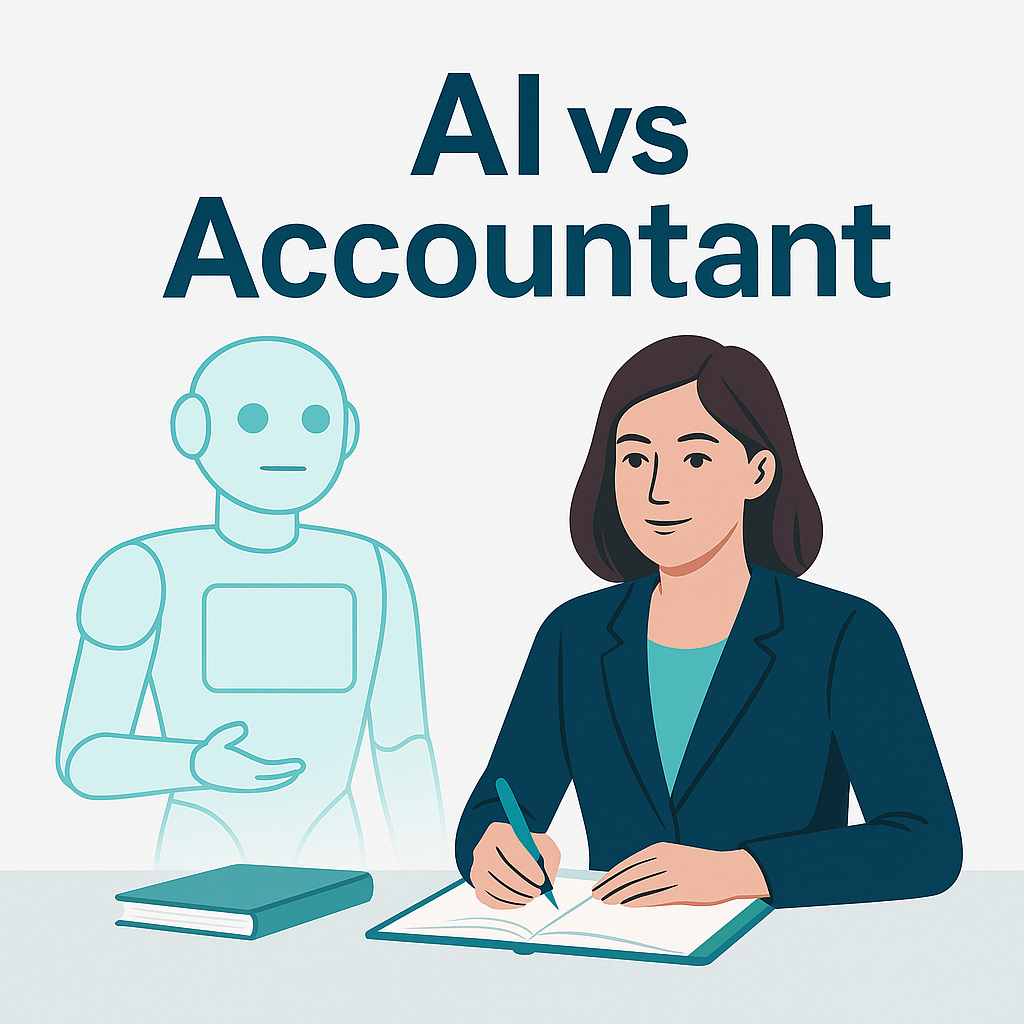
AI vs Accountant

AI vs Accountant: Why Professional Advice Matters When Deciding Between a Sole Trader and a Limited Company

Artificial intelligence (AI) tools can crunch numbers in an instant, but they can’t replace the judgement of a chartered accountant—especially when it comes to choosing the right business structure. 

In two recent LinkedIn posts I shared a real example from my practice: an enquiry from Jane, a soletrader making around £60,000 profit. She was wondering if she should incorporate to save tax. I fed the same numbers into an AI calculator and discovered a series of mistakes. This blog summarises what happened, sets the record straight with the latest tax rules and shows why relying solely on AI can cost you.

Jane’s Question: Should I Go Limited?

Jane’s friend said that she would “save tax by going limited”. On the face of it, the idea sounds plausible. After all, corporation tax on profits up to £50,000 is 19%, which is lower than the 2045 % bands for personal income tax. Limited companies also separate personal liability from business debt and often allow more flexibility to raise finance or share profits within a family.

Tax rules change constantly, and several factors can tip the scales. To illustrate this, I ran the numbers for Jane twice: once manually and once through an AI calculator. Here’s what I found.

How AI Got the Numbers Wrong

When I asked the AI tool to work out Jane’s tax bill as a sole trader versus a limited company for the 2025/26 tax year, it provided a neat set of figures—but they weren’t correct. The mistakes stemmed from using outdated thresholds and misunderstanding how different taxes and expenses work. Below are some highlights (or lowlights):

  1. Employer’s National Insurance (NIC) threshold – The AI used the old £9,100 annual secondary threshold. From April 2025, employers start paying NIC at a much lower £5,000 threshold .
  2. Employer’s NIC rate – It applied the historic 13.8 % rate instead of the current 15 % rate on earnings above the secondary threshold .
  3. Accountancy fees as a posttax deduction – The calculator treated accountancy fees as an aftertax personal expense. In reality, they’re deductible business expenses that reduce taxable profit .
  4. Class 4 National Insurance – It assumed a flat 6 % NIC on all profits over £12,570. For 2025/26, selfemployed people pay 6 % NIC only up to £50,270; profits above this are charged at 2 % .
  5. Class 2 National Insurance – The tool still added Class 2 NIC. From April 2024, Class 2 NIC is no longer payable for selfemployed people with profits above the Lower Profits Limit .
  6. Overall outcome – Most importantly, the AI concluded that incorporating would save Jane money. When I corrected the numbers using current rates and allowed for accountancy fees correctly, the result flipped: as a limited company director with a typical mix of salary and dividends, Jane would actually keep around £352 less than she would as a sole trader.
  7. The AI’s calculation looked plausible but ignored the subtle changes to National Insurance thresholds and rates and mistreated expenses. It only came close to the right answer when I challenged it with followup questions.

A Reality Check: Sole Trader vs Limited Company at £60,000 Profit

Comparing Jane’s situation under both structures using the latest 2025/26 rates:

Item Sole Trader Limited Company
Profit before tax £60,000 £60,000
Deductible accountancy fees Deducted from profit before tax Deducted from company profits 
Taxes & NIC Income tax at personal rates + Class 4 NIC (6 % to £50,270; 2 % thereafter)  Corporation tax at 19 % on profits; salary subject to employer NIC at 15 % and employee NIC; dividends taxed at lower rates 
Net amount retained ≈ £45,705 ≈ £45,353

The table shows that, at this profit level, there’s no immediate tax advantage in forming a limited company. The savings from the lower corporationtax rate are largely wiped out by higher employer NIC, administrative costs and the correct treatment of accountancy fees.

Beyond Tax: Other Factors to Consider

Tax isn’t the only consideration. Here are some other factors Jane (and anyone in a similar position) should weigh up:

  • Liability – A limited company is a separate legal entity, so you’re personally liable only for the amount you’ve invested . Sole traders are personally responsible for their business debts.
  • Funding and ownership – Companies can raise capital more easily by issuing shares and may attract investors . Sole traders rely on personal or business loans.
  • Administrative burden – Companies must submit annual accounts and corporationtax returns from the first pound of profit . Sole traders have a simpler selfassessment and can use cashbasis accounting .
  • Flexibility in sharing profits – Companies can distribute profits as dividends to shareholders, including family members, potentially reducing the family’s overall tax bill .
  • Future plans – For owners expecting to earn significantly more in future or raise external finance, incorporating might deliver longterm savings and growth opportunities despite higher shortterm costs.

Conclusion: Why You Still Need Professional Advice

AI tools can provide ballpark figures, but they often lag behind when tax rules change or when they’re required to interpret realworld complexities. In Jane’s case, an AI calculator not only used obsolete NIC thresholds and rates but also mishandled deductible expenses and underplayed the realworld result. If Jane had relied on the tool, she might have opted to incorporate unnecessarily and ended up paying more tax.

When it comes to AI vs Accountants there is no one size fits all answer to the sole trader vs limited company question. Profits, risk tolerance, growth plans and personal circumstances all play a part. A qualified accountant stays on top of legislative changes – such as the new £5,000 employer NIC threshold and 15 % rate , or the removal of Class 2 NIC  – and can model how those changes affect your specific situation. Before making a decision that could impact your takehome pay and liability for years to come, always seek professional advice.

So to contact The Accountancy Office to discuss this more please click here or call us on 01386 366741

Changing Accountants

looking at changing accountants? A business will often have a need to change accountants. Having the right accountant is crucial for your financial health and peace of mind. Whether you’re a small business owner or an individual, your accountant plays a significant role in managing your finances, tax planning, and ensuring compliance with regulations. If you’re considering changing your accountant, it’s essential to approach the process methodically to ensure a smooth transition and continued financial stability. 

Here’s a step-by-step guide to help you navigate this change effectively.

1: Assess Your Current Needs

Before making any changes, take a moment to evaluate your current needs. Ask yourself:

  • Are your accounting needs being met?
  • Do you feel your current accountant understands your business or personal financial goals?
  • Are communication and responsiveness issues?
  • Have there been any recent errors or concerns about the quality of service?

Understanding what you need from your accountant will help you find someone who better fits your requirements. Also consider timings. For example, if you’re mid-way through your financial year, you may wish to look for a new accountant closer to the end of the financial year to minimise disruption. 

2: Research Potential Accountants

Once you have a clear understanding of your needs, start researching potential accountants. Consider the following:

  • Experience and Expertise: Look for accountants with experience in your industry or who specialize in your particular needs, whether personal finance, small business accounting, or corporate tax planning.
  • Reputation: Check online reviews, ask for recommendations from trusted colleagues or friends, and verify credentials and professional affiliations.
  • Services Offered: Ensure the prospective accountant offers the services you require, such as bookkeeping, tax preparation, financial planning, and advisory services.

3: Arrange Meetings

Narrow down your list to a few potential suitable matches and contact them for an initial telephone call or meeting. Prepare questions that will help you assess their fit for your needs, such as:

  • How do you stay updated with the latest tax laws and regulations?
  • What is your approach to communication and client updates?
  • How regularly will we speak?
  • How long does it typically take you to complete the type of work I need?

This step will help you gauge their expertise, communication style and ability to meet your expectations.

4: Evaluate Costs

Understanding the cost structure is vital to ensure it aligns with your budget. Discuss the following aspects:

  • Pricing models (hourly rates, fixed fees)
  • Any additional fees for specific services
  • How often billing occurs and preferred payment methods

While cost is important, it should be weighed against the value and quality of service provided and your needs.

5: Check Compatibility

Ensure that you and your potential accountant have a good rapport. This relationship should be based on trust and mutual understanding. Consider:

  • How comfortable you feel discussing sensitive financial information
  • Whether their communication style matches your preferences
  • If their values and business ethics align with yours

A good working relationship can lead to better financial outcomes and smoother collaboration.

6: Review Contract and Terms

Once you’ve chosen an accountant, carefully review the contract and terms of service. Ensure all services, fees, and expectations are clearly outlined. Don’t hesitate to ask for clarification on any point before signing.

7: Notify Your Current Accountant

Once you’ve finalised your decision, professionally notify your current accountant of your intention to switch. Review your contract to understand any notice periods or obligations. Request all necessary documents and ensure all outstanding invoices are settled.

8: Transfer Information

Your new accountant will work with your new accountant to transfer financial documents, tax records and any other necessary information. This transition should be seamless, with both parties coordinating to minimise disruption and it should only take a short amount of time. 

Your new accountant will also set up the relevant authorisations with HMRC so that they can deal with your tax affairs on your behalf. They will also carry out anti-money laundering checks which they are legally required to do. 

Changing accountants can seem daunting, but it’s crucial to ensuring your financial needs are met effectively. By following these steps, you can make an informed decision and find an accountant who aligns with your goals and supports your financial well-being. With the right partner, you can look forward to enhanced financial management and peace of mind.

International Women’s Day 2025

Mary Harris Smith: The First Female Chartered Accountant

In a profession historically dominated by men, Mary Harris Smith stands out as a true trailblazer. Born in 1844 in London, she became the world’s first female chartered accountant but her path to recognition was far from straightforward. Her story is one of determination, resilience, and an unwavering belief in her own abilities.

Early Life and Career

Mary Harris Smith was born into a middle-class family and showed an early aptitude for numbers and business. In the late 19th century, opportunities for women in finance were virtually non existent, but Mary refused to let that stop her. She trained as an accountant and began practicing independently, something almost unheard of for a woman at the time.

By the 1880s, Mary had established her own practice, offering services in bookkeeping, auditing, and financial advice. Her skills and professionalism were widely respected, yet her gender remained a barrier to full professional recognition.

In 1888, Mary applied to join the Institute of Chartered Accountants in England and Wales (ICAEW) – the professional body for chartered accountants. Despite her experience and impeccable credentials, she was rejected solely because she was a woman. The ICAEW’s rules at the time explicitly restricted membership to men.

Undeterred, Mary continued her work and reapplied several times over the next few decades. Each time, she was met with the same response – women were not allowed.

Breaking the Glass Ceiling

It wasn’t until after World War I, when attitudes toward women’s roles in society began to shift, that Mary’s persistence paid off. In 1919, the Sex Disqualification (Removal) Act was passed, making it illegal to exclude women from professions solely based on their gender.

Mary wasted no time. In 1920, at the age of 76, she was finally admitted to the ICAEW, becoming the world’s first female chartered accountant. It was a historic moment, not only for Mary but for women in the accounting profession worldwide.

Mary’s Legacy 

Mary Harris Smith’s achievement paved the way for future generations of female accountants. Her story is a testament to the power of perseverance and the importance of challenging outdated norms.

Today, women make up nearly half of all chartered accountants in the UK – a remarkable shift that can be traced back to the doors Mary Harris Smith pushed open over a century ago.

Mary’s legacy reminds us that progress is often hard-won but with determination and resilience, change is possible.

How much National Insurance will my company pay in 2025-2026?

As the dust settles on Labour’s first Budget in 14 years, we look at the impact for businesses, in particular single directors’ of limited companies.
The biggest budget announcement related to employers National Insurance – hitting employers hard with a double whammy:
1.2% increase in employer’s National Insurance contributions (NICs) and

Lowering the secondary threshold (ST) which means employers will start to pay NICs on employees earnings from £5,000 instead of the current £9,100 threshold.
However, the Employment Allowance (EA) will be increasing from £5,000 to £10,500 which will help offset some of the additional costs – for some employers but not all.
Sole Directors of Limited Companies
A company with only one employee paid above the Class 1 National Insurance Secondary Threshold, where that employee is also a director of the company are specifically excluded from claiming the employment allowance.
Whilst this has always been the case (and seems somewhat outdated considering the reduction in the dividend allowance in recent years,) it does mean that sole directors will face additional NIC costs.

Example of a Director’s salary in 2024-2025
In 2024, for a single director working through their own limited company, the most common annual salary was typically £9,100 or £12,570.
A salary of £9,100 did not attract any Employers’ National Insurance because it was below the secondary threshold. The salary also suffered no employee tax or National Insurance contributions and secured a pension credit for the director, as if it had been paid and securing a qualifying year towards the state pension.

National Insurance Chart

What will be the optimum director’s salary in 2025/26?
We anticipate that for the 2025/26 tax year, sole Director Companies (with no employees) will choose between:
A salary of £12,570, achieving the most efficient tax savings available and securing a qualifying pension year, or
Lower salary, not achieving full tax savings and forfeiting a qualifying year, or
No salary, reducing administrative costs and forfeiting a qualifying year.
A salary of £6,000 would incur an Employers NI liability of £150 but it is too low to qualify for the state pension credit because earnings need to be equivalent to the National Insurance Lower Earnings Limit (LEL) (£533 per month 24/25 and £542 25/26).
However, a £6,000 salary + £150 Employers NI would save corporation tax of 19% = £1,169.
If you were to take £6,000 as dividends rather than a salary, the personal tax would be £481 based on the basic dividend rate of 8.75%.
Alternatively, employing an additional staff member could make the business eligible for the Employment Allowance, offsetting Employer NI costs.
There is no definitive answer as to what the best optimum salary for a limited company director is. It will depend on your personal situation, business position, personal priorities and overall tax position.
For company directors with employees (who can claim the Employers Allowance) the optimum salary will usually be £12,570.

What about larger companies?
Let’s look at a larger business who employs 150 workers paying them an average salary of £38,000 per year.
This example highlights the real impact of the Employers’ National Insurance changes with a clear illustration of how the government expects to raise extra revenue.
150 employees x £38,000 = £5,700,000
2024 Employers NIC x 13.8% = £598,230
The company is not eligible to claim the Employment Allowance as it’s Employers NICs exceeds £100,000.

In 2025, with the same number of employees and the same pay rate, the business will be eligible for the Employer’s Allowance due to the removal of the £100,000 cap.
150 employees x £38,000 = £5,700,000
2025 Employers NIC x 15% = £742,250
Less Employers Annual Allowance = £10,500
Total Employers NIC = £732,000
This employer will pay an additional £133,770 in NICs each year (22%) which is a very significant additional tax burden.

How Can I Prepare for the Employers National Insurance Increase?
Adapting to these new additional costs will require thoughtful adjustments to business strategies.
Here are some proactive steps you can take:
Review Payroll Budgets: Businesses should reassess their payroll budgets to account for the higher NI rate and the lowered threshold. By factoring in these changes early, businesses can better prepare for their financial impact. The National Minimum Wage increase should also be considered, where applicable.

Optimise Workforce Planning: Employers may consider restructuring roles or adjusting part-time and flexible work arrangements to manage costs effectively. Prioritising efficiency within the workforce and identifying ways to improve productivity could help offset some of the increased NI expenses.

Consider Salary Sacrifice Schemes: Some companies may explore tax-efficient remuneration options like salary sacrifice schemes, where employees opt to exchange part of their salary for non-cash benefits, reducing the NI liabilities for both employers and employees.

National Minimum Wage
The 6.7% increase in the National Minimum Wage from April 2025 will have a significant impact on employers.
The National Living Wage will increase to £12.21 from 1st April 2025, for employees aged 21 and above.
The National Minimum Wage rate for employees aged 18-20 will increase to £10.00.
The National Minimum Wage rate for employees aged 16-17 will increase to £7.55.
The National Minimum Wage rate for apprentices will increase to £7.55.

Conclusion
There were other announcements that will impact business owners that we have not covered in this blog. For your free Budget Report and complimentary personalised NIC projection, please call 01386 366741 or email us here

The Accountancy Office has been selected as part of SmallBiz100 Line Up

📣Exciting news alert! 📣


⭐🎉Following a nationwide search, we’re absolutely delighted to have been selected as part of this year’s SmallBiz100 line-up, which showcases 100 of the most impressive independent businesses from across the nation as part of the countdown to Small Business Saturday on 7th December 2024 ⭐🎉


We’ll be bringing Evesham into the spotlight on 27th October 2024!

Watch out for further details coming soon!

https://smallbusinesssaturdayuk.com

What does the UK general election mean for my business?

General Elections can bring uncertainty due to whoever wins making their own polices which affect us all.

We’re going to focus on the key points of the leading parties’ manifestos ahead of the next general election on 4th July and how they may affect small businesses.

Conservatives

  • abolishing “the main rate of self-employed National Insurance. The party’s long term ambition is to scrap National Insurance entirely “when financial conditions allow”
  • further cut tax for workers by reducing employee National Insurance contributions by another 2p
  • no plans to raise corporation tax or capital gains tax
  • keep the VAT registration threshold under review  and exploring options to “smooth the cliff edge” at £90,000
  • uphold triple lock pension, raising state pensions by 8.5%. plan to introduce a “triple lock plus,” increasing the tax-free state pension allowance by at least 2.5%.
  • to expand tax free childcare – 30 hours a week of free childcare from when a child is nine months old until they start school.
  • To tackle late payment, promote digital invoicing, improving enforcement of the Prompt Payment Code, building on the creation Laof the Small Business Commissioner with “powers to tackle unfavourable payment practices
  • Continuing programmes including the Invest in Women Task Force and the Lilac Review to encourage more female and disabled entrepreneurs.
  • Work with the British Business Bank and private sector fund managers to secure a £250m Invest In Women Fund to support female entrepreneurs.
  • Take more companies “out of the scope of burdensome reporting requirements” by lifting the employee threshold allowing more companies to be considered medium-sized. This is expected to save small businesses at least one million hours of admin per year.

Labour

  • no plans to increase taxes on working people
  • not to expect increases to National Insurance contributions, as well as basic, higher, or additional rates of income tax, and VAT.
  • to cap corporation tax at 25%
  • modernising HMRC in order to tackle tax avoidance (this will involve even further increasing reporting requirements)
  • providing more training opportunities
  • remove zero-hour contracts and ban ‘fire-and-rehire’ practices.
  • to make it easier for small businesses to access funding and investment
  • to introduce tough new laws to stamp out late payments 
  • Scrap business rates and replace it with a system of business property taxation that is “fairer for bricks and mortar businesses”
  • To rejuvenate the construction industry – build 1.5 million new homes, create opportunities for small builders and tradespeople and to reduce red tape in the current building planning system
  • Retain annual investment allowance for small business, and “give firms greater clarity on what qualifies for allowances to improve business investment decisions”

Reform UK

  • raising the income tax threshold to £20,000 a year 
  • removing VAT from energy bills
  • raising the minimum corporation tax profit threshold to £100,000 – as well as reducing the corporation tax rate to 20% (and eventually 15%)
  • abolishing existing IR35 rules
  • raising the VAT threshold to £120,000
  • abolishing business rates for high street small businesses
  • Cut entrepreneur’s tax relief to 5%.
  • Reform the tax system.

Liberal Democrats

  • cut income tax by raising the tax-free personal allowance
  • Abolishing business rates and replacing them with a commercial landowner levy to help high streets.
  • support HMRC in hopes they can better tackle tax avoidance
  • review IR35 reforms (also known as off-payroll working) to make sure the self-employed are treated fairly
  • Setting a 20% higher minimum wage for people on zero-hour contracts attimes of normal demand.
  • Expand parental leave and pay
  • Supporting small employers with statutory sick pay costs
  • Reforming capital gains tax to “close loopholes exploited by the super-wealthy by adjusting the rates and basing them solely on capital gains while increasing the tax-free allowance from £3,000 to £5,000, on top of a new tax-free allowance for inflation, and introducing a relief for small businesses”.
  • boost trade for small businesses by bringing down trade barriers
  • enforce the prompt payment code – requiring companies with more than 250 employees to sign
  • Tackle the problem of late payments
  • protect triple lock pensions so they rise in line with inflation, wages, or by 2.5% (whichever is highest)
  • plan to establish a new employment status: the dependent contractor, which will sit between employed and self-employed. This will provide entitlement to minimum earnings levels, sick pay, and holiday entitlement.

What are your thoughts? What policies would you like to see implemented to support small businesses?

Will you be voting this year?

Did you know we have expanded our service offering?

We are very excited with our new diversified service offering. This is a fantastic step towards providing our clients with comprehensive and tailored support throughout their business lifecycle and personal financial journey.

We have added Independent Financial Advice to our existing suite of services.

Expanded Services
Expanded Services

As your accountants we work with you to ensure your tax affairs are optimal.  When it comes to your personal wealth there is far more to it than just tax planning.  This is why we believe that in the same way you receive expert advice relating to your tax affairs and business management, you should ensure you receive expert financial planning advice from a qualified financial planner.

Our separately branded financial planning business TAG Financial Planning are able to offer advice in all areas of financial planning, such as:

  1. Pensions – review existing pensions, company contributions and commercial property.
  2. Investments – portfolio review, ISAs, Bonds, Trusts etc
  3. Insurance – shareholder protection, key man insurance, Mortgage life cover, income protection and critical illness cover
  4. Goals Based Financial Planning – identifying goals and objectives, current position, strategy & progress modelling, implementation of plan to achieve success.

A member of our financial planning team will work with you to identify, quantify, and bring to life your life goals. They will assess your current financial plan, review the strengths and weaknesses, and advise what adjustments are required align it with your desired outcome. 

Together with the financial planning we can also provide additional services as follows:

  1. Corporate Restructuring
  2. Share Schemes
  3. M&A Tax Services
  4. Capital Allowances
  5. R&D Tax Credits
  6. Tax Investigation
  7. Exit Planning
  8. Trust Planning
  9. Inheritance Tax Planning
  10. Property Portfolio Planning
  11. Valuations
  12. VAT Advice

We all know the benefit of receiving timely professional advice when it comes to financial matters, especially when big changes are required. 

For more information or to arrange an initial conversation with an adviser please contact us on 01386 366741 or email hello@tpitdev2.uk and one of our advisers will be in contact.

You work hard for your money, it’s important that your money works hard for you!