The Accountancy Office

How Better Bookkeeping Can Boost Profit Margins for Broadway Businesses

Running a business in Broadway comes with its own charm. The footfall, the loyal local customers, the seasonal spikes in trade. It all creates opportunity. Yet behind every successful shop, café, contractor, or service provider, there is one factor that often separates steady growth from financial struggle. That factor is bookkeeping. Most business owners do not wake up thinking about spreadsheets or reconciliations. They focus on sales, customers, and operations. But the truth is simple. Without accurate numbers, even the busiest business can quietly lose money. This is where Bookkeeping Broadway becomes more than a back-office task. It becomes a profit-driving tool.

At Accountancy Office, we have worked with businesses that believed they were doing well, only to discover hidden inefficiencies. Once their bookkeeping was corrected, their profit margins improved within months. Let us explore how this happens and why it matters for your business.

Why Profit Margins Matter More Than Revenue

Many Broadway businesses chase revenue. More sales, more customers, more growth. But revenue alone does not guarantee success. Profit margins tell the real story.

If your expenses grow faster than your income, your business is working harder for less reward. Poor bookkeeping hides this problem. Strong bookkeeping exposes it early.

When your financial records are clear and up to date, you can see

  • Where money is being spent unnecessarily
  • Which products or services are truly profitable
  • How seasonal changes affect your cash flow

This clarity gives you control. And control leads directly to higher profits.

The Real Cost of Poor Bookkeeping

It is easy to underestimate how much disorganised records can cost. Many Broadway business owners rely on basic spreadsheets or delayed entries. Some mix personal and business finances. Others leave bookkeeping until the end of the quarter.

The result is not just inconvenience. It is lost money.

Here are some common issues caused by poor bookkeeping

1. Missed Expenses

If expenses are not recorded properly, you may miss legitimate deductions. That means you end up paying more tax than necessary.

2. Cash Flow Surprises

Without real-time tracking, you may think you have more cash than you actually do. This can lead to late payments or unnecessary borrowing.

3. Pricing Mistakes

If you do not know your exact costs, you might underprice your services. This reduces your profit margin without you realising it.

4. Compliance Risks

Inaccurate records can lead to errors in tax filings. This increases the risk of penalties.

Working with experienced Accountants Broadway helps eliminate these risks before they affect your bottom line.

 

Accountants in Broadway


How Better Bookkeeping Directly Increases Profit Margins

Good bookkeeping is not just about keeping records. It is about using financial data to make smarter decisions.

Here is how it actively improves profitability.

Clear Visibility of Costs

When every expense is tracked correctly, patterns start to appear. You can identify

  • Suppliers that are charging more than competitors
  • Subscriptions or services you no longer need
  • Areas where small savings add up over time

Even a five percent reduction in unnecessary expenses can significantly boost your profit margin.

Smarter Pricing Decisions

Many Broadway businesses set prices based on market trends or competitors. But without knowing your exact costs, pricing becomes guesswork.

Accurate bookkeeping allows you to

  • Calculate true cost per product or service
  • Identify high-margin offerings
  • Adjust pricing confidently

This ensures you are not leaving money on the table.

Improved Cash Flow Management

Cash flow is the lifeblood of any business. Even profitable businesses can struggle if cash is not managed properly.

With professional Bookkeeping in Broadway, you gain

  • Real-time insights into incoming and outgoing funds
  • Better control over payment cycles
  • Reduced risk of late fees or overdrafts

This stability allows you to focus on growth instead of survival.

Better Financial Planning

When your records are accurate, planning becomes easier and more effective.

You can

  • Forecast future income and expenses
  • Plan investments with confidence
  • Prepare for seasonal fluctuations

This level of control helps you make decisions that increase long-term profitability.

Reduced Tax Liability

One of the biggest advantages of proper bookkeeping is tax efficiency.

Working closely with Tax Advisors in Broadway, you can

  • Claim all allowable expenses
  • Avoid costly errors in filings
  • Plan ahead for tax payments

This ensures you keep more of what you earn.

Real-Life Scenario: A Broadway Retail Shop

Consider a small retail shop in Broadway. The owner believed the business was doing well because sales were consistent. However, profits remained low.

After improving bookkeeping, several issues were identified

  • Excess inventory was tying up cash
  • Certain products had very low margins
  • Utility costs had increased without notice

By addressing these issues, the owner

  • Reduced unnecessary stock
  • Focused on high-margin items
  • Negotiated better supplier deals

Within six months, profit margins improved noticeably without increasing sales.

This is the power of accurate financial insight.

Why Local Expertise Matters

Bookkeeping is not just about numbers. It is about understanding the local business environment.

Broadway businesses face unique challenges such as

  • Seasonal tourism fluctuations
  • Local competition
  • Regional tax considerations

Working with professionals who specialise in Bookkeeping in Broadway ensures your financial strategy is tailored to your specific market.

At Accountancy Office, we combine technical expertise with local knowledge. This allows us to provide practical advice that delivers real results.

The Shift Towards Digital Bookkeeping

Modern bookkeeping has evolved. Cloud-based tools and automation have made financial management faster and more accurate.

Businesses in Broadway are increasingly adopting

  • Cloud accounting software
  • Automated expense tracking
  • Real-time financial dashboards

These tools reduce manual errors and provide instant access to key data.

However, technology alone is not enough. It needs to be managed correctly. This is where professional support becomes essential.

Signs Your Bookkeeping Needs Improvement

Not sure if your current system is holding you back? Here are some warning signs

  • You do not know your exact monthly profit
  • Tax season feels stressful and rushed
  • You rely on guesswork for financial decisions
  • Your records are not updated regularly
  • You struggle to track cash flow

If any of these sound familiar, it may be time to upgrade your approach.

How Accountancy Office Helps Broadway Businesses Grow

At Accountancy Office, we go beyond basic bookkeeping. Our goal is to help you increase profitability through better financial management.

Our services include

  • Accurate and timely record keeping
  • Cash flow monitoring and reporting
  • Expense analysis and cost reduction strategies
  • Collaboration with Accountants in Broadway for strategic advice
  • Support from experienced Tax Advisors in Broadway

Tax Advisors Broadway

We work closely with you to understand your business and provide insights that make a real difference.

The Link Between Confidence and Profit

When your finances are organised, your confidence grows. You make decisions faster. You take calculated risks. You invest in opportunities without hesitation.

This mindset shift is often overlooked, but it plays a major role in business success.

Better bookkeeping does not just improve your numbers. It changes how you run your business.

A Smarter Way Forward for Broadway Businesses

Broadway is home to hardworking entrepreneurs who take pride in what they do. Whether you run a café, a boutique, or a service-based business, your success depends on more than just sales.

It depends on how well you manage your finances.

Investing in professional Bookkeeping in Broadway is not an expense. It is a strategic move that pays for itself through improved efficiency, reduced costs, and higher profit margins.

Final Thoughts

If your goal is to grow your business, increase profits, and reduce financial stress, better bookkeeping is the place to start.

It gives you clarity. It gives you control. Most importantly, it gives you the ability to make smarter decisions every day.

At Accountancy Office, we help Broadway businesses turn their numbers into opportunities. If you are ready to take your profitability seriously, now is the time to act.

Because in business, what you do not track, you cannot improve.
AI vs Accountant

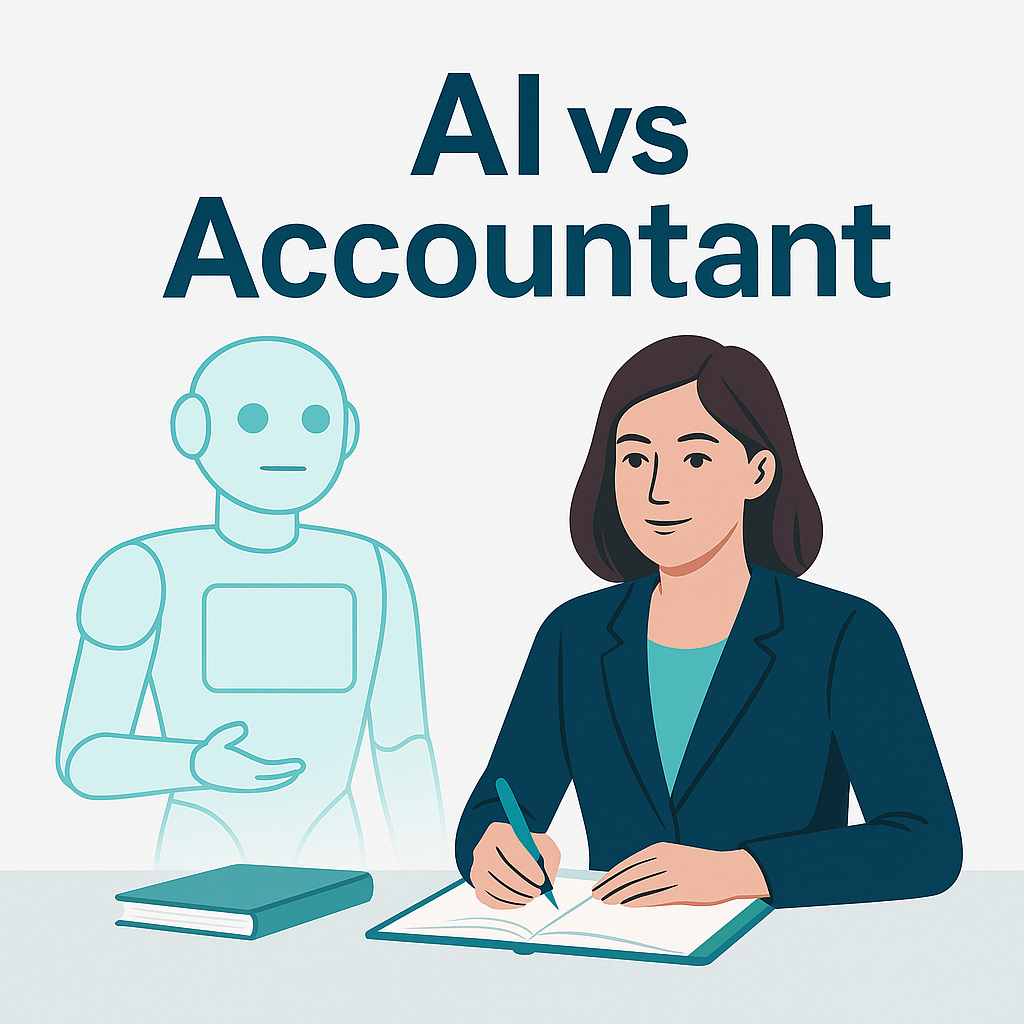
AI vs Accountant: Why Professional Advice Matters When Deciding Between a Sole Trader and a Limited Company

Artificial intelligence (AI) tools can crunch numbers in an instant, but they can’t replace the judgement of a chartered accountant—especially when it comes to choosing the right business structure. 

In two recent LinkedIn posts I shared a real example from my practice: an enquiry from Jane, a soletrader making around £60,000 profit. She was wondering if she should incorporate to save tax. I fed the same numbers into an AI calculator and discovered a series of mistakes. This blog summarises what happened, sets the record straight with the latest tax rules and shows why relying solely on AI can cost you.

Jane’s Question: Should I Go Limited?

Jane’s friend said that she would “save tax by going limited”. On the face of it, the idea sounds plausible. After all, corporation tax on profits up to £50,000 is 19%, which is lower than the 2045 % bands for personal income tax. Limited companies also separate personal liability from business debt and often allow more flexibility to raise finance or share profits within a family.

Tax rules change constantly, and several factors can tip the scales. To illustrate this, I ran the numbers for Jane twice: once manually and once through an AI calculator. Here’s what I found.

How AI Got the Numbers Wrong

When I asked the AI tool to work out Jane’s tax bill as a sole trader versus a limited company for the 2025/26 tax year, it provided a neat set of figures—but they weren’t correct. The mistakes stemmed from using outdated thresholds and misunderstanding how different taxes and expenses work. Below are some highlights (or lowlights):

  1. Employer’s National Insurance (NIC) threshold – The AI used the old £9,100 annual secondary threshold. From April 2025, employers start paying NIC at a much lower £5,000 threshold .
  2. Employer’s NIC rate – It applied the historic 13.8 % rate instead of the current 15 % rate on earnings above the secondary threshold .
  3. Accountancy fees as a posttax deduction – The calculator treated accountancy fees as an aftertax personal expense. In reality, they’re deductible business expenses that reduce taxable profit .
  4. Class 4 National Insurance – It assumed a flat 6 % NIC on all profits over £12,570. For 2025/26, selfemployed people pay 6 % NIC only up to £50,270; profits above this are charged at 2 % .
  5. Class 2 National Insurance – The tool still added Class 2 NIC. From April 2024, Class 2 NIC is no longer payable for selfemployed people with profits above the Lower Profits Limit .
  6. Overall outcome – Most importantly, the AI concluded that incorporating would save Jane money. When I corrected the numbers using current rates and allowed for accountancy fees correctly, the result flipped: as a limited company director with a typical mix of salary and dividends, Jane would actually keep around £352 less than she would as a sole trader.
  7. The AI’s calculation looked plausible but ignored the subtle changes to National Insurance thresholds and rates and mistreated expenses. It only came close to the right answer when I challenged it with followup questions.

A Reality Check: Sole Trader vs Limited Company at £60,000 Profit

Comparing Jane’s situation under both structures using the latest 2025/26 rates:

Item Sole Trader Limited Company
Profit before tax £60,000 £60,000
Deductible accountancy fees Deducted from profit before tax Deducted from company profits 
Taxes & NIC Income tax at personal rates + Class 4 NIC (6 % to £50,270; 2 % thereafter)  Corporation tax at 19 % on profits; salary subject to employer NIC at 15 % and employee NIC; dividends taxed at lower rates 
Net amount retained ≈ £45,705 ≈ £45,353

The table shows that, at this profit level, there’s no immediate tax advantage in forming a limited company. The savings from the lower corporationtax rate are largely wiped out by higher employer NIC, administrative costs and the correct treatment of accountancy fees.

Beyond Tax: Other Factors to Consider

Tax isn’t the only consideration. Here are some other factors Jane (and anyone in a similar position) should weigh up:

  • Liability – A limited company is a separate legal entity, so you’re personally liable only for the amount you’ve invested . Sole traders are personally responsible for their business debts.
  • Funding and ownership – Companies can raise capital more easily by issuing shares and may attract investors . Sole traders rely on personal or business loans.
  • Administrative burden – Companies must submit annual accounts and corporationtax returns from the first pound of profit . Sole traders have a simpler selfassessment and can use cashbasis accounting .
  • Flexibility in sharing profits – Companies can distribute profits as dividends to shareholders, including family members, potentially reducing the family’s overall tax bill .
  • Future plans – For owners expecting to earn significantly more in future or raise external finance, incorporating might deliver longterm savings and growth opportunities despite higher shortterm costs.

Conclusion: Why You Still Need Professional Advice

AI tools can provide ballpark figures, but they often lag behind when tax rules change or when they’re required to interpret realworld complexities. In Jane’s case, an AI calculator not only used obsolete NIC thresholds and rates but also mishandled deductible expenses and underplayed the realworld result. If Jane had relied on the tool, she might have opted to incorporate unnecessarily and ended up paying more tax.

When it comes to AI vs Accountants there is no one size fits all answer to the sole trader vs limited company question. Profits, risk tolerance, growth plans and personal circumstances all play a part. A qualified accountant stays on top of legislative changes – such as the new £5,000 employer NIC threshold and 15 % rate , or the removal of Class 2 NIC  – and can model how those changes affect your specific situation. Before making a decision that could impact your takehome pay and liability for years to come, always seek professional advice.

So to contact The Accountancy Office to discuss this more please click here or call us on 01386 366741

What Is MTD ITSA and How Will It Affect Self-Employed Individuals?

MTD ITSA or Making Tax Digital for Income Tax Self Assessment  is a major change in the way self-employed individuals and landlords in the UK manage and report their taxes. It’s part of the Government’s initiative to modernise the tax system, making it more efficient and accurate.

If you’re self-employed, this change will likely affect how you record your income and submit your tax returns. 

What Is MTD ITSA?

MTD ITSA stands for Making Tax Digital for Income Tax Self Assessment. It’s an extension of the government’s Making Tax Digital (MTD) initiative, which already applies to VAT. MTD ITSA focuses on streamlining the process of reporting income tax for:

•Self-employed individuals.

•Landlords with annual rental income.

Under MTD ITSA, you’ll need to:

1.Keep digital records of your income and expenses.

2.Submit quarterly updates to HMRC through MTD-compatible software.

3.File an End of Period Statement (EOPS) and a Final Declaration to confirm your annual income and tax obligations.

Who Does MTD ITSA Apply To?

MTD ITSA will apply to:

•Self-employed individuals and landlords with an annual business or property income exceeding £50,000 starting from April 2026.

•Those with income between £30,000 and £50,000 starting from April 2027.

HMRC is still consulting on how MTD ITSA will apply to individuals earning below £30,000 annually, but it’s important to stay informed about future changes.

How Will MTD ITSA Affect You?

1.Digital Record-Keeping

If you’re used to keeping paper records or spreadsheets, you’ll need to switch to MTD-compatible software to maintain your records digitally.

2.Quarterly Reporting

Instead of filing a single self assessment tax return once a year, you’ll submit four quarterly updates to HMRC. These updates provide a snapshot of your income and expenses throughout the year.

3.End of Year Submissions

You’ll still need to finalise your accounts at the end of the year, but the process will be streamlined through digital tools.

4.Increased Transparency

With regular updates, you’ll have a clearer picture of your tax obligations throughout the year, reducing the risk of surprises at year-end.

What Do You Need to Do to Prepare for MTD ITSA?

1.Determine If MTD ITSA Applies to You

Check your annual income from self-employment or property to see when you’ll need to comply with MTD ITSA.

2.Choose MTD-Compatible Software

We work with Xero which is MTD-compatible. Xero will help you maintain digital records and submit quarterly updates seamlessly.

3.Organise Your Records

Ensure your income and expense records are accurate and up to date. If you’ve been relying on paper receipts, it’s time to transition to a digital system.

4.Learn the New Process

Familiarise yourself with how to submit quarterly updates, End of Period Statements, and the Final Declaration.

5.Seek Professional Advice

Navigating MTD ITSA can be complex, especially if you’re new to digital accounting. A trusted accountant can guide you through the transition and ensure compliance.

How The Accountancy Office Can Help

At The Accountancy Office we understand the challenges that MTD ITSA presents for self-employed individuals. Our goal is to make the transition as smooth and stress-free as possible.

Here’s how we can support you:

1.Expert Guidance

We’ll help you understand how MTD ITSA affects your specific situation and create a plan to ensure compliance.

2.Software Setup and Training

Choosing and setting up MTD-compatible software can be overwhelming. We’ll recommend the best option for your needs, handle the setup and provide training to get you up to speed.

3.Quarterly Reporting Support

We’ll assist with preparing and submitting your quarterly updates to HMRC, ensuring accuracy and timeliness.

4.Year-End Submissions

From the End of Period Statement to the Final Declaration, we’ll manage your year-end submissions so you can focus on running your business.

5.Ongoing Support

We’re here to answer your questions, troubleshoot issues, and provide peace of mind as you navigate MTD ITSA.

Get Ready for MTD ITSA with The Accountancy Office

Making Tax Digital for Income Tax Self Assessment is a significant change, but you don’t have to face it alone. At The Accountancy Office, we’re experts in helping self-employed individuals transition to MTD seamlessly.

Feeling overwhelmed with the thought of Making Tax Digital? Book your FREE consultation today and gain clarity on what MTD means for your business. Don’t miss this opportunity to get expert guidance tailored to your needs – make tax compliance stress-free and get ready for the future of tax reporting! 

HMRC’s online Time to Pay system


Can’t pay your tax bill in full by 31 January 2025? HMRC’s online Time to Pay system lets self-assessment taxpayers spread the cost over monthly instalments. With plans available for tax bills up to £30,000, this flexible option can help you avoid late payment penalties.

 Those eligible for the self-serve option can arrange payments online without needing to contact an HMRC adviser. HMRC has revealed that more than 15,000 taxpayers have already set up a Time to Pay payment plan for the 2023-24 tax year.

To qualify for the online Time to Pay option, taxpayers must meet these conditions:

  • No outstanding tax returns
  • No other tax debts
  • No existing HMRC payment plans

For taxpayers who do not meet these requirements or owe more than £30,000, other payment arrangements may be available. These are typically agreed on a case-by-case basis, tailored to individual circumstances and liabilities, allowing businesses and individuals to pay off their debt over time.

HMRC’s Director General for Customer Services, said:

We’re here to help customers get their tax right and if you are worried about how to pay your self-assessment bill, help and support is available. Customers can set up their online payment plan to suit their own financial circumstances and can spread those payments across a maximum of 12 months. It is a valuable option for someone needing extra flexibility in meeting their tax obligations.

Once you have your plan in place, take time to review your finances and prepare for next year’s tax bill. To find out if you are claiming all tax allowances available to you, visit HMRC’s website.

If you need help preparing tax returns, for companies or individuals , our team is here to help. We offer a comprehensive accounting service .

Contact us today to ensure you and your company’s taxes stay on the right track! 

Call us on  01386 366741 or email here and one of our advisers will be in contact.

MTD ITSA or Making Tax Digital for Income Tax Self Assessment FAQ

1. What is MTD ITSA?

MTD ITSA (Making Tax Digital for Income Tax Self Assessment) is part of HMRC’s initiative to modernise the tax system. It requires self-employed individuals and landlords to keep digital records of their income and expenses and submit quarterly updates to HMRC using MTD-compatible software.

2. Who does MTD ITSA apply to?

MTD ITSA applies to:

•Self-employed individuals and landlords with annual business or property income exceeding £50,000 from April 2026.

•Those earning between £30,000 and £50,000 will need to comply from April 2027.

Future plans for individuals earning below £30,000 are still under consultation.

3. When does MTD ITSA start?

April 2026: For individuals earning over £50,000 annually.

April 2027: For individuals earning between £30,000 and £50,000 annually.

4. What records do I need to keep digitally?

You’ll need to maintain digital records of:

•Income

•Expenses

•Bank transactions related to your business or property

These records must be stored in MTD-compatible software and submitted to HMRC via quarterly updates.

5. How often do I need to report under MTD ITSA?

You’ll need to submit:

Four quarterly updates summarizing your income and expenses throughout the year.

An End of Period Statement (EOPS) at the end of the tax year to confirm your figures.

A Final Declaration to declare all your income and confirm your tax liability.

6. What software do I need for MTD ITSA?

You’ll need MTD-compatible software to manage your records and submit updates such as Xero.

We can help set up Xero for you and provide you with training to get you started.

7. What happens if I don’t comply with MTD ITSA?

Failure to comply with MTD ITSA requirements may result in penalties from HMRC. These could include fines for late submissions or non-compliance with digital record-keeping rules.

8. Do I still need to file a Self Assessment tax return?

No. MTD ITSA replaces the traditional annual Self Assessment tax return. Instead, you’ll submit quarterly updates, an EOPS, and a Final Declaration through your MTD-compatible software.

9. How can The Accountancy Office help me with MTD ITSA?

We provide:

•Expert advice tailored to your situation.

•Setup and training for MTD-compatible software.

•Assistance with quarterly updates and year-end submissions.

•Ongoing support to ensure compliance and peace of mind.

10. What should I do now to prepare for MTD ITSA?

•Determine when MTD ITSA will apply to you based on your income.

•Choose and set up MTD-compatible software.

•Organise your records to ensure accuracy.

•Seek professional advice to streamline the transition.

Still Have Questions? We’re Here to Help!

At The Accountancy Office, we specialise in helping self-employed individuals prepare for MTD ITSA. Whether you need help setting up software or understanding your obligations, we’re just a call away.

Feeling overwhelmed with the thought of Making Tax Digital? Book your FREE consultation today and gain clarity on what MTD means for your business. Don’t miss this opportunity to get expert guidance tailored to your needs – make tax compliance stress-free and get ready for the future of tax reporting! 

Changes to how self employed business profits are taxed from 2023/24 – Basis Period Reform

two-businesswomen-having-meeting-in-office

Are you self-employed or a partner in a trading partnership?

If so, you should be aware of how the ‘basis period reform’ may affect you.

A major change in tax is being introduced from 6 April 2024, resulting in self employed individuals being taxed on the profits made within the tax year irrespective of when their accounting year ends. 

This will impact businesses who do not have a 31 March or 5 April year end and who previously have only been taxed on the profits of the accounting year which ended within the tax year. 

Self employed people who have an accounting period that aligns with the tax year will continue as normal.

What is a ‘basis period’?

Self employed generally prepare accounts to the same fixed date each year. This is known as the ‘basis period’.

Specific rules determine the basis period in certain cases, including during the early years of trading. These rules can create overlapping basis periods which can result in profits being taxed twice which generate ‘overlap relief.’ This is usually released on cessation of the business or retirement. Overall, this basis of taxation is called the ‘current year basis.’

For example, currently, if a business draws up its accounts to 30 April, in the 2022/23 tax year, it will be taxed on the profits for the year ended 30 April 2022.

The change in ‘basis period’ will result in a significant impact for the tax year to 5 April 2024 as businesses without a 31 March (or 5 April) year end will be taxed on more than 12 months profit, being the profits to their current accounting year end plus the profit between that date and 5 April. 

Transitional rules for the 2023/2024 tax year 

In the transitional year, self employed businesses that do not have an accounting year end date between 31 March and 5 April will need to recognise two profit elements:

  • The usual profits of the accounting period ending in the 2023/24 tax year; and 
  • The profits from the period starting immediately after the end of that accounting period to 5 April 2024, less any available overlap relief brought forward

A self employed business with a 30th April year end will be exposed to paying tax on nearly 2 years profit under the new rules, creating a significant cashflow disadvantage.

There are two ways that this can be managed:

  1. Where an individual has unused overlap relief available from the start of their trade (or a previous year end change), this can be offset against the profits of the additional period; and
  1. Businesses can elect to spread the additional profits over 5 years.

If you fall within the criteria which requires a change in the basis period for your business, it’s important to realise that you will not pay additional tax, but there may be an acceleration in the payments of tax you owe. 

What to consider:

These changes are intended to simplify tax for the self employed but they can create complexity for those affected. The change to the basis period will simplify reporting requirements as the Making Tax Digital for Income Tax Self-Assessment (MTD ITSA) changes are eventually rolled out.

Think about the cashflow implications of the changes and how you will manage them.

Give some thought to changing your year end to 31 March to make the calculation of taxable profits from 2024/25 clearer.

The changes may result in significant tax balances owing through the transitional period, so it pays to plan ahead and be prepared for the change. 

For further information visit: https://www.gov.uk/government/news/how-hmrc-assesses-profits-for-some-sole-traders-and-partnerships-to-change#:~:text=Changing%20your%20accounting%20period,31%20March%20or%205%20April.


For qualified advice and help contact The Accountancy Office in Evesham were we will be happy to discuss your requirements. Visit us at our website,  email us or call us on 01386 764761