The Accountancy Office

Tax Changes on Pick-Ups – April 2025

Starting from April 2025, significant tax changes will affect double cab pick-up trucks in the UK. 

These vehicles, previously classified as commercial vehicles, will be reclassified as passenger cars for tax purposes. This reclassification impacts capital allowances and Benefit-in-Kind (BIK) taxation.

Key Dates:

1 April 2025: For corporation tax purposes, double cab pick-ups will be treated as passenger vehicles.

6 April 2025: For income tax purposes, double cab pick-ups will be treated as passenger vehicles.

Implications:

Capital Allowances: Currently, businesses can claim full capital allowances on double cab pick-ups, treating them as plant and machinery. After 1 April 2025, these vehicles will be subject to car capital allowance rates, which vary based on CO₂ emissions.  

Benefit-in-Kind (BIK) Taxation: Presently, double cab pick-ups are subject to a flat BIK rate (£3,960 annually). Post 6 April 2025, BIK rates will align with those of passenger cars, calculated on a sliding scale based on CO₂ emissions. Given the typically higher emissions of these vehicles, this change could substantially increase tax liabilities for employees using them as company vehicles.  

Transitional Provisions:

To ease the transition, HMRC has outlined that businesses purchasing, leasing, or ordering a double cab pick-up before the respective April 2025 deadlines can continue to apply the current tax treatment until:

•The vehicle is disposed of.

•The lease expires.

•5 April 2029.

Whichever occurs first.  

Action:

If you’re considering acquiring a double cab pick-up, doing so before April 2025 will allow you to benefit from the existing tax advantages during the transitional period. It’s advisable to assess the long-term implications of these changes on their tax position and consider alternative vehicle options if necessary.

Please contact us if you’d like to discuss your Vehicle tax planning then please contact us on 01386 366741 or email here and one of our advisers will be in contact.

How much turnover does my business need to make to pay me what I want after tax?”

“How much turnover does my business actually need to make… to pay me what I want… after all taxes?”

If you run a UK limited company and pay yourself a combination of salary and dividends, you might be wondering:

This is a deceptively complicated question. Why? Because income tax, dividend tax, corporation tax and personal allowance tapering all interact in messy ways. The wrong combination of income can trigger extra tax without giving you more in your pocket.

But what if you had a simple calculator that worked it out for you?

That’s exactly what I’ve created: a Turnover Target Calculator for UK Ltd Company Directors.

What the Calculator Does

This tool shows you the turnover required to achieve a specific monthly net income, after all taxes have been deducted.

You can enter:

  • Your desired net monthly income
  • Your business’s annual running costs
  • Your average gross profit margin 

The calculator then shows:

  • The gross dividend required to reach your net income target
  • Tax due on your salary and dividends
  • Corporation tax
  • Total pre-tax profit required
  • The turnover you need to make it all happen

Tax Efficiency Built In

It also flags when you hit the messy part of the tax system:

  • Personal allowance tapering (starts above £100,000 income)
  • The “tax trap” zone where earning more = disproportionately higher tax

To make this easier to compare, the calculator uses a benchmark row set at a net income of £99,999.96. This helps you see exactly how much extra tax you’d pay if you go over it.

Why This Matters

Most small business owners overestimate how much income they can draw and underestimate how much profit they need to generate to get it. Worse, they hit tax traps without realising.

This calculator makes it easy to:

  • Set realistic income goals
  • Avoid the tax cliffs
  • Understand the true cost of drawing more
  • Forecast more accurately

Ready to Use It to calculate your Business Turnover??

The Turnover Calculator is formatted for ease of use, fully protected so you can’t break it, and designed to save you time, stress, and costly mistakes.

For a limited time, the Turnover Calculator will be available free of charge whilst testing is completed. After that, it will be available to purchase online via secure link.

Would you like to start planning smarter with free access today? Get in touch to request your free copy. 

pastedGraphic.png

Need help with your limited company finances? I’m an accountant who specialises in helping business owners take control of their numbers and their income. Drop me a message if you’d like personalised support.

How does Corporation Tax work?

Corporation Tax Isn’t Just an Annual Bill

Many business owners view corporation tax as a once-a-year bill that lands on their desk when their accountant prepares the company’s accounts. However, this approach can lead to financial surprises and cash flow struggles.

The reality is that corporation tax is a recurring tax—it increases as your profits grow, meaning it’s something you need to plan for throughout the year, not just at the end of it. Ideally, you should be reviewing the company’s corporation tax liability each month.

Corporation tax is charged on your company’s taxable profits, and it doesn’t stay static. If your business is doing well and your profits are increasing, your corporation tax bill will rise too. Unlike fixed costs such as rent or insurance, it’s a variable expense that grows in line with your financial success.

Many company owners make the mistake of only thinking about corporation tax at year-end, but by then, it’s too late to do much about it. That’s why proactive tax planning is essential.

How Corporation Tax Works

  • Tax is based on profit – The more your business earns, the more tax you’ll pay. The main rate of corporation tax is currently 25% for companies with profits over £250,000, while those with profits under £50,000 pay 19%. If your profits fall between these figures, a marginal relief calculation applies.
  • Tax is due 9 months after year-end – Your corporation tax bill is payable nine months and one day after your company’s financial year-end. But if your profits exceed £1.5 million, you may need to pay in quarterly instalments.
  • Profitability changes your tax bill – If your business was making £50,000 in profit last year and pays tax at 19%, but this year profits rise to £100,000, your tax bill could more than double.

Why You Need to Plan for Corporation Tax

1. Avoid Cash Flow Problems

If you wait until your tax return is filed to think about corporation tax, you may find yourself struggling to set aside the money in time. By treating it as a recurring cost, you can build it into your cash flow planning.

2. Make the Most of Tax Reliefs

With proactive planning, you can take advantage of tax reliefs and allowances that reduce your liability. For example:

  • Pension contributions – These are tax-deductible and a great way to extract profit efficiently.
  • Capital allowances – If you invest in equipment, you may be able to claim tax relief.
  • R&D tax credits – If you’re investing in innovation, you could be eligible for tax savings.

3. Set Aside Money Regularly

A good habit is to put aside a percentage of your profits into a separate tax reserve account. Some business owners save 19-25% of their monthly profits to ensure they have enough when the bill is due.

4. Know When to Take Dividends

If you take dividends, remember they’re paid after corporation tax. If your tax bill is higher than expected, it could affect how much you can withdraw from the company. Regularly reviewing your figures with an accountant can help you manage this.

Final Thoughts

Corporation tax isn’t just a once-a-year headache – it’s an ongoing financial commitment that grows with your business. Planning ahead, setting aside funds regularly, and making the most of tax reliefs can help you stay in control.

If you’d like advice on tax-efficient profit extraction, cash flow planning, or reducing your corporation tax liability, get in touch.

Call us on 01386 366741 or visit accountancyoffice.co.uk to book your free consultation.

12 Monthly Checks To Keep Your Business Finance Healthy

Running a successful business isn’t just about making sales—it’s about keeping your business finances in order so you can grow sustainably and avoid cash flow surprises. 

Whether you’re handling your finances in-house or outsourcing them to a finance team like ours, there are key checks you should be making every month to keep your business in good financial health.

Here are 12 essential things to review every month:

1. Cash Flow Position

Cash is the lifeblood of your business. Check your cash flow statement to see how much money is coming in and going out. If your cash reserves are running low, identify where the bottlenecks are and take action – whether that’s chasing late payments or adjusting spending.

2. Bank Reconciliations

Ensure your bank statements match your accounting records. Unreconciled transactions could indicate missing income, duplicate payments, or errors that might distort your financial picture.

3. Aged Receivables (Outstanding Invoices)

Check your list of unpaid customer invoices. Who owes you money? How overdue are they? Consistently late payments can hurt your cash flow, so follow up on outstanding invoices and consider adjusting payment terms if late payments are a recurring issue. 

It’s also crucial to issue invoices promptly – delays in sending invoices can lead to delays in payment, which in turn affects your cash flow. The sooner your customers receive their invoices, the sooner they can process and pay them.

4. Aged Payables (Outstanding Bills)

Review what you owe to suppliers and ensure you’re paying on time. Late payments can lead to damaged relationships or unnecessary interest charges. If cash flow is tight, prioritise essential suppliers and negotiate payment terms.

5. Profit & Loss Review

Look at your monthly profit and loss (P&L) statement to see if your revenue and expenses are on track. Compare against previous months and your budget—are there any unexpected changes that need addressing?

6. Business Savings & Tax Reserves

Set aside money for tax liabilities such as VAT, Corporation Tax, and PAYE. Unexpected tax bills can cause cash flow problems, so having a dedicated savings strategy is crucial.

7. Payroll & Staff Costs

Ensure payroll is processed correctly and on time, and check for any discrepancies. If staff costs are rising, assess whether this aligns with business growth or if there are inefficiencies to address.

8. Expense Tracking & Cost Control

Are your expenses creeping up? Review your spending to ensure you’re not paying for unused subscriptions or unnecessary costs. Small leaks can add up over time.

9. VAT & Other Tax Deadlines

Ensure you’re keeping up with VAT returns, PAYE, and other tax obligations. Missing deadlines can lead to penalties, so stay on top of them or use an outsourced finance function to manage this for you.

10. Sales Performance & Pipeline

Revenue isn’t just about what you’ve made—it’s also about what’s coming in. Review your sales figures and check your pipeline. If sales are slowing, consider adjusting your strategy or increasing marketing efforts.

11. Stock & Inventory (If Applicable)

If you sell products, review your inventory levels. Are you holding too much stock and tying up cash? Or are you running low and at risk of losing sales? Keeping a balance is key.

12. Business Goals & Financial KPIs

Each month, assess your progress towards key financial goals. Are you hitting your revenue targets? Have you reduced costs where needed? Are you staying within budget? Tracking KPIs will help you make informed business decisions.

By running these checks monthly, you’ll gain a clearer understanding of your business’s financial health and be able to take proactive steps before issues arise. 

If you’d rather focus on growing your business and leave the numbers to experts, our outsourced finance function can handle all of this for you – giving you peace of mind that your finances are in safe hands.

Need help staying on top of your business finances? Get in touch with us today.

Call us on 01386 366741

Buying vs Leasing a Car Through Your Limited Company: Pros and Cons

As a UK limited company owner, you may be considering buying or leasing a company car. Each option has financial, tax, and cash flow implications that can impact your business. In this post, we’ll explore the advantages and disadvantages of both buying and leasing a vehicle through your company to help you make an informed decision.

Buying a Car Through Your Limited Company

Advantages of Buying

  1. Full Ownership – The car belongs to the company, meaning you have an asset that can be sold later.
  1. Tax Relief on Capital Allowances. If the car is brand new and fully electric, you can claim 100% first-year allowances (FYA), reducing corporation tax.

For petrol and diesel cars, tax relief depends on CO₂ emissions.

  1. No Mileage Restrictions – Unlike leasing, there are no penalties for exceeding a set mileage limit.
  1. Potential VAT Reclaim – If the car is used exclusively for business, VAT can be reclaimed (rare for company cars, as personal use often applies).

Disadvantages of Buying

1. High Upfront Costs – A large capital outlay is required, affecting cash flow.

2.Depreciation – The car loses value over time, reducing its resale price.

3.Benefit-in-Kind (BIK) Tax – if the car is available for personal use, the director will pay BIK tax based on CO₂ emissions and list price. BIK rates are much lower for electric cars (currently 2% until 2025).

4.Ongoing Maintenance & Repairs – The company is responsible for all upkeep costs.

Leasing a Car Through Your Limited Company

Advantages of Leasing

  1. Lower Initial Cost – Monthly lease payments improve cash flow compared to buying outright.
  2. Fixed Monthly Payments – Easier to budget with predictable costs.
  3. Tax Deductible Expenses – lease payments are tax-deductible if the car is used for business. However, if CO₂ emissions exceed 50g/km, only 85% of lease costs are deductible.
  4. VAT Reclaim – if the car is used only for business, you can reclaim 100% VAT.If there’s any private use, you can still reclaim 50% of the VAT on lease payments.
  5. No Depreciation – at the end of the lease, you return the car and can upgrade to a newer model.

Disadvantages of Leasing

  1. You Never Own the Car – There’s no asset to sell at the end of the lease.
  2. Mileage Limits Apply – Exceeding the agreed mileage can result in costly penalties.
  3. Long-Term Commitment – If your business circumstances change, ending the lease early may incur fees.
  4. BIK Tax Still Applies – Even though you don’t own the car, a leased vehicle available for personal use is still subject to BIK tax.

Example – Buying vs Leasing an Electric Car

Emma runs a successful consultancy business and wants a company car for both business and personal use. She’s considering a Tesla Model Y (list price: £45,000).

Option 1: Buying the Tesla

  • As the car is fully electric, Emma’s company can claim 100% first-year allowances, reducing taxable profits by £45,000 in year one.
  • She avoids mileage restrictions, making it ideal for long-distance client meetings.
  • However, she’ll have BIK tax to pay, though at just 2%, it’s far lower than for petrol/diesel cars.
  • Maintenance costs are low, but depreciation means the car will lose value over time.

Option 2: Leasing the Tesla

  • A 3-year lease costs around £700 per month (£8,400 per year).
  • The lease payments are fully tax-deductible, reducing corporation tax.
  • VAT can be reclaimed (50% for personal use).
  • Emma can switch to a newer model after 3 years, but she must stay within the mileage limit to avoid penalties.

What’s Emma’s decision? Emma opts to buy the Tesla because of the 100% capital allowance, lower long-term costs, and flexibility to keep the car as long as she wants. However, if cash flow were tighter, she might have chosen leasing.

Which Option is Best?

  • If cash flow is a priority, leasing offers lower initial costs and predictable expenses.
  • If you want a company asset and are considering a tax-efficient electric car, buying may be the better choice.
  • For high-mileage drivers, buying avoids excess mileage penalties.
  • If you prefer changing cars regularly, leasing may be more convenient.

💡 Tip: If you’re unsure which option is best for you, speak to your accountant (that’s me!) for tailored advice based on your company’s financial situation and tax position.

Need help deciding? Get in touch, and let’s run the numbers!

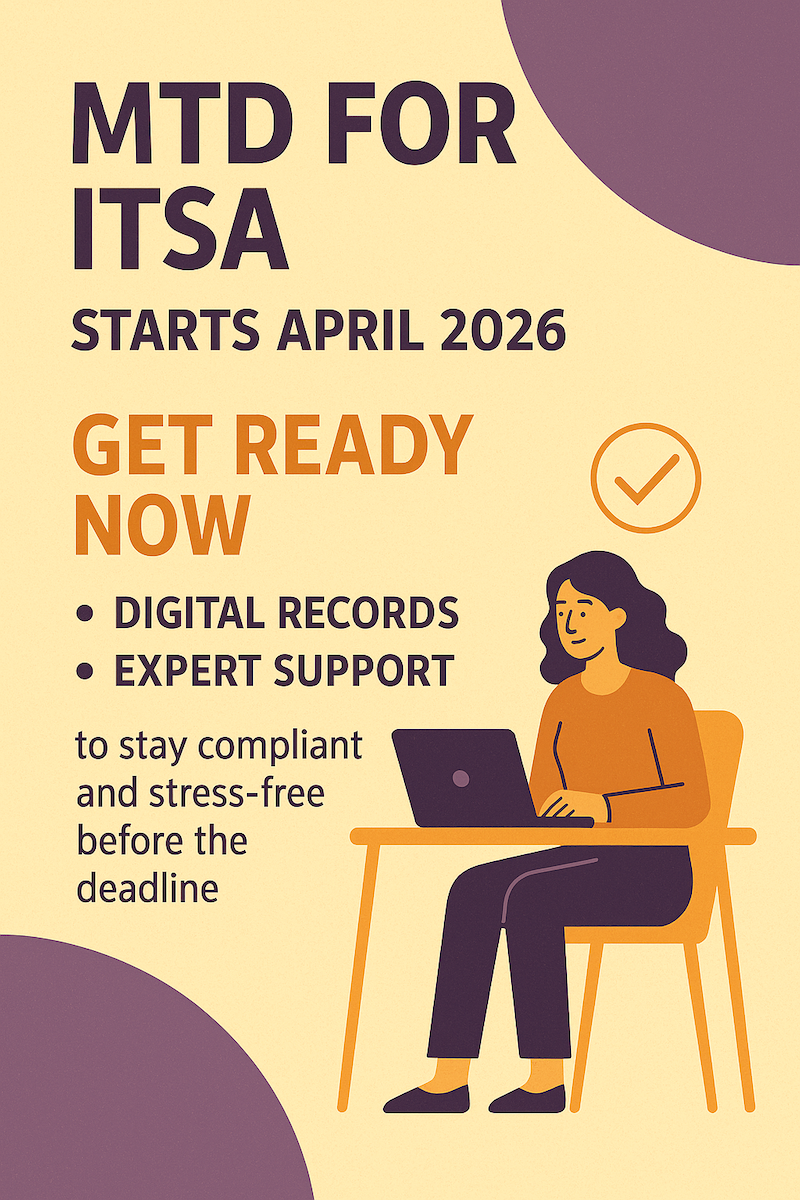
What Is MTD ITSA and How Will It Affect Self-Employed Individuals?

MTD ITSA or Making Tax Digital for Income Tax Self Assessment  is a major change in the way self-employed individuals and landlords in the UK manage and report their taxes. It’s part of the Government’s initiative to modernise the tax system, making it more efficient and accurate.

If you’re self-employed, this change will likely affect how you record your income and submit your tax returns. 

What Is MTD ITSA?

MTD ITSA stands for Making Tax Digital for Income Tax Self Assessment. It’s an extension of the government’s Making Tax Digital (MTD) initiative, which already applies to VAT. MTD ITSA focuses on streamlining the process of reporting income tax for:

•Self-employed individuals.

•Landlords with annual rental income.

Under MTD ITSA, you’ll need to:

1.Keep digital records of your income and expenses.

2.Submit quarterly updates to HMRC through MTD-compatible software.

3.File an End of Period Statement (EOPS) and a Final Declaration to confirm your annual income and tax obligations.

Who Does MTD ITSA Apply To?

MTD ITSA will apply to:

•Self-employed individuals and landlords with an annual business or property income exceeding £50,000 starting from April 2026.

•Those with income between £30,000 and £50,000 starting from April 2027.

HMRC is still consulting on how MTD ITSA will apply to individuals earning below £30,000 annually, but it’s important to stay informed about future changes.

How Will MTD ITSA Affect You?

1.Digital Record-Keeping

If you’re used to keeping paper records or spreadsheets, you’ll need to switch to MTD-compatible software to maintain your records digitally.

2.Quarterly Reporting

Instead of filing a single self assessment tax return once a year, you’ll submit four quarterly updates to HMRC. These updates provide a snapshot of your income and expenses throughout the year.

3.End of Year Submissions

You’ll still need to finalise your accounts at the end of the year, but the process will be streamlined through digital tools.

4.Increased Transparency

With regular updates, you’ll have a clearer picture of your tax obligations throughout the year, reducing the risk of surprises at year-end.

What Do You Need to Do to Prepare for MTD ITSA?

1.Determine If MTD ITSA Applies to You

Check your annual income from self-employment or property to see when you’ll need to comply with MTD ITSA.

2.Choose MTD-Compatible Software

We work with Xero which is MTD-compatible. Xero will help you maintain digital records and submit quarterly updates seamlessly.

3.Organise Your Records

Ensure your income and expense records are accurate and up to date. If you’ve been relying on paper receipts, it’s time to transition to a digital system.

4.Learn the New Process

Familiarise yourself with how to submit quarterly updates, End of Period Statements, and the Final Declaration.

5.Seek Professional Advice

Navigating MTD ITSA can be complex, especially if you’re new to digital accounting. A trusted accountant can guide you through the transition and ensure compliance.

How The Accountancy Office Can Help

At The Accountancy Office we understand the challenges that MTD ITSA presents for self-employed individuals. Our goal is to make the transition as smooth and stress-free as possible.

Here’s how we can support you:

1.Expert Guidance

We’ll help you understand how MTD ITSA affects your specific situation and create a plan to ensure compliance.

2.Software Setup and Training

Choosing and setting up MTD-compatible software can be overwhelming. We’ll recommend the best option for your needs, handle the setup and provide training to get you up to speed.

3.Quarterly Reporting Support

We’ll assist with preparing and submitting your quarterly updates to HMRC, ensuring accuracy and timeliness.

4.Year-End Submissions

From the End of Period Statement to the Final Declaration, we’ll manage your year-end submissions so you can focus on running your business.

5.Ongoing Support

We’re here to answer your questions, troubleshoot issues, and provide peace of mind as you navigate MTD ITSA.

Get Ready for MTD ITSA with The Accountancy Office

Making Tax Digital for Income Tax Self Assessment is a significant change, but you don’t have to face it alone. At The Accountancy Office, we’re experts in helping self-employed individuals transition to MTD seamlessly.

Feeling overwhelmed with the thought of Making Tax Digital? Book your FREE consultation today and gain clarity on what MTD means for your business. Don’t miss this opportunity to get expert guidance tailored to your needs – make tax compliance stress-free and get ready for the future of tax reporting! 

HMRC’s online Time to Pay system


Can’t pay your tax bill in full by 31 January 2025? HMRC’s online Time to Pay system lets self-assessment taxpayers spread the cost over monthly instalments. With plans available for tax bills up to £30,000, this flexible option can help you avoid late payment penalties.

 Those eligible for the self-serve option can arrange payments online without needing to contact an HMRC adviser. HMRC has revealed that more than 15,000 taxpayers have already set up a Time to Pay payment plan for the 2023-24 tax year.

To qualify for the online Time to Pay option, taxpayers must meet these conditions:

  • No outstanding tax returns
  • No other tax debts
  • No existing HMRC payment plans

For taxpayers who do not meet these requirements or owe more than £30,000, other payment arrangements may be available. These are typically agreed on a case-by-case basis, tailored to individual circumstances and liabilities, allowing businesses and individuals to pay off their debt over time.

HMRC’s Director General for Customer Services, said:

We’re here to help customers get their tax right and if you are worried about how to pay your self-assessment bill, help and support is available. Customers can set up their online payment plan to suit their own financial circumstances and can spread those payments across a maximum of 12 months. It is a valuable option for someone needing extra flexibility in meeting their tax obligations.

Once you have your plan in place, take time to review your finances and prepare for next year’s tax bill. To find out if you are claiming all tax allowances available to you, visit HMRC’s website.

If you need help preparing tax returns, for companies or individuals , our team is here to help. We offer a comprehensive accounting service .

Contact us today to ensure you and your company’s taxes stay on the right track! 

Call us on  01386 366741 or email here and one of our advisers will be in contact.

Why Limited Company Directors and Shareholders Need to Prepare Dividend Vouchers (and How to Do It) 

As a director/shareholder of a limited company in the UK, understanding dividends is crucial for ensuring compliance with tax laws and maintaining clear financial records. A key part of the dividend process is preparing dividend vouchers. In this blog, we’ll explain why dividend vouchers are necessary and guide you through how to create them. 


What Are Dividend Vouchers? 

A dividend voucher is a document that records the payment of a dividend to a company’s shareholder(s). It acts as a formal receipt and is an important part of your company’s records. 

When a limited company declares and pays a dividend, it must issue a dividend voucher to each shareholder receiving a payment. This applies to all dividends, whether interim or final. 


Why Are Dividend Vouchers Necessary? 

1. Compliance with HMRC Requirements 

HMRC requires evidence of all dividend payments. Dividend vouchers serve as this evidence, showing that the payment was a dividend and not another type of transaction, such as a director’s loan or salary. Without a voucher, you may struggle to justify payments during a tax inspection. 


2. Record-Keeping Obligations 

As a limited company, you are legally required to maintain accurate records of all financial transactions. Dividend vouchers help fulfil this requirement by documenting distributions made to shareholders. 


3. Shareholder Clarity 

Dividend vouchers ensure transparency, providing shareholders with clear documentation of the payment, the amount received, and the associated tax credit. 


How to Prepare a Dividend Voucher 

Creating a dividend voucher is a straightforward process, but it must include specific information to meet legal requirements. Below is a step-by-step guide: 

Step 1: Confirm Company Profitability 

Before declaring dividends, ensure the company has sufficient post-tax profits to cover the payment. Paying dividends when there are no distributable profits could result in legal and financial complications. 

Step 2: Declare the Dividend 

Hold a board meeting to officially declare the dividend. Record the decision in the meeting minutes, stating the amount of the dividend and the date of payment. 

Step 3: Draft the Dividend Voucher 

Your dividend voucher should include the following details: 

          Company name: The name of the limited company issuing the dividend. 

          Shareholder details: The name and address of the shareholder receiving the payment. 

          Date of issue: The date the dividend is declared or paid. 

          Dividend amount: The gross amount of the dividend. 

          Tax credit: The tax credit associated with the dividend (this only applies to older distributions, as the dividend tax credit was removed in 2016). 

          Net amount: The amount the shareholder will receive after tax (if applicable). 

 Step 4: Distribute the Voucher 

Provide each shareholder with a copy of their dividend voucher. This can be done physically or electronically, depending on preference. 

Step 5: Retain Copies for Company Records 

Keep a copy of each dividend voucher in your company’s records. This ensures you have the necessary documentation for future reference or potential HMRC audits. 


How to Prepare a Dividend Voucher 

Creating a dividend voucher is a straightforward process, but it must include specific information to meet legal requirements. Below is a step-by-step guide: 

Step 1: Confirm Company Profitability 

Before declaring dividends, ensure the company has sufficient post-tax profits to cover the payment. Paying dividends when there are no distributable profits could result in legal and financial complications. 

Step 2: Declare the Dividend 

Hold a board meeting to officially declare the dividend. Record the decision in the meeting minutes, stating the amount of the dividend and the date of payment. 

Step 3: Draft the Dividend Voucher 

Your dividend voucher should include the following details: 

          Company name: The name of the limited company issuing the dividend. 

          Shareholder details: The name and address of the shareholder receiving the payment. 

          Date of issue: The date the dividend is declared or paid. 

          Dividend amount: The gross amount of the dividend. 

          Tax credit: The tax credit associated with the dividend (this only applies to older distributions, as the dividend tax credit was removed in 2016). 

          Net amount: The amount the shareholder will receive after tax (if applicable). 

Step 4: Distribute the Voucher 

Provide each shareholder with a copy of their dividend voucher. This can be done physically or electronically, depending on preference. 


Step 5: Retain Copies for Company Records 

Keep a copy of each dividend voucher in your company’s records. This ensures you have the necessary documentation for future reference or potential HMRC audits. 


What Happens Without Dividend Vouchers? 

Failing to prepare dividend vouchers can lead to: 

          HMRC challenging payments, potentially reclassifying them as salary or director’s loans, which could result in additional tax liabilities. 

          Difficulties in proving compliance with UK company law. 

          Confusion or disputes among shareholders regarding payment amounts and dates. 


Need help with dividend vouchers? 

Dividend vouchers may seem like a small administrative task, but they are vital for maintaining compliance and clarity within your limited company. By ensuring dividends are properly declared and documented, you protect your business and shareholders from potential complications. 

If you need help preparing dividend vouchers or understanding dividend compliance, our team is here to help. We offer a dividend voucher preparation service for a monthly fixed fee. 

Contact us today to ensure your company’s finances stay on the right track! 

Call us on  01386 366741 or email here and one of our advisers will be in contact.

MTD ITSA or Making Tax Digital for Income Tax Self Assessment FAQ

1. What is MTD ITSA?

MTD ITSA (Making Tax Digital for Income Tax Self Assessment) is part of HMRC’s initiative to modernise the tax system. It requires self-employed individuals and landlords to keep digital records of their income and expenses and submit quarterly updates to HMRC using MTD-compatible software.

2. Who does MTD ITSA apply to?

MTD ITSA applies to:

•Self-employed individuals and landlords with annual business or property income exceeding £50,000 from April 2026.

•Those earning between £30,000 and £50,000 will need to comply from April 2027.

Future plans for individuals earning below £30,000 are still under consultation.

3. When does MTD ITSA start?

April 2026: For individuals earning over £50,000 annually.

April 2027: For individuals earning between £30,000 and £50,000 annually.

4. What records do I need to keep digitally?

You’ll need to maintain digital records of:

•Income

•Expenses

•Bank transactions related to your business or property

These records must be stored in MTD-compatible software and submitted to HMRC via quarterly updates.

5. How often do I need to report under MTD ITSA?

You’ll need to submit:

Four quarterly updates summarizing your income and expenses throughout the year.

An End of Period Statement (EOPS) at the end of the tax year to confirm your figures.

A Final Declaration to declare all your income and confirm your tax liability.

6. What software do I need for MTD ITSA?

You’ll need MTD-compatible software to manage your records and submit updates such as Xero.

We can help set up Xero for you and provide you with training to get you started.

7. What happens if I don’t comply with MTD ITSA?

Failure to comply with MTD ITSA requirements may result in penalties from HMRC. These could include fines for late submissions or non-compliance with digital record-keeping rules.

8. Do I still need to file a Self Assessment tax return?

No. MTD ITSA replaces the traditional annual Self Assessment tax return. Instead, you’ll submit quarterly updates, an EOPS, and a Final Declaration through your MTD-compatible software.

9. How can The Accountancy Office help me with MTD ITSA?

We provide:

•Expert advice tailored to your situation.

•Setup and training for MTD-compatible software.

•Assistance with quarterly updates and year-end submissions.

•Ongoing support to ensure compliance and peace of mind.

10. What should I do now to prepare for MTD ITSA?

•Determine when MTD ITSA will apply to you based on your income.

•Choose and set up MTD-compatible software.

•Organise your records to ensure accuracy.

•Seek professional advice to streamline the transition.

Still Have Questions? We’re Here to Help!

At The Accountancy Office, we specialise in helping self-employed individuals prepare for MTD ITSA. Whether you need help setting up software or understanding your obligations, we’re just a call away.

Feeling overwhelmed with the thought of Making Tax Digital? Book your FREE consultation today and gain clarity on what MTD means for your business. Don’t miss this opportunity to get expert guidance tailored to your needs – make tax compliance stress-free and get ready for the future of tax reporting! 

VAT, Can I reclaim it pre-trading ?


There are special rules that determine the recoverability of VAT incurred before a business registered for VAT. 

This type of VAT is known as pre-registration input VAT. There are different rules for the supply of goods and services, but VAT can only be reclaimed if the pre-registration expenses relate to the supply of taxable goods or services by the newly VAT registered business.

The time limit is backdated from the date of registration and is:

  • 4 years for goods on hand, or that were used to make other goods on hand; and
  • 6 months for services.

The pre-trading VAT input tax should be reclaimed on a business’s first VAT return. When a new VAT registration is applied for, there is an option to backdate the registration (known as the effective date of registration), this option should be considered if there is additional input tax that will be made recoverable.

There are special rules for partially exempt businesses and for businesses that have non-business income and for the purchase of capital items within the capital goods scheme.

HMRC’s internal guidance on the issue provides interesting examples. One of those relate to the purchase of a van by an individual for wholly private purposes. Three years later the individual registers for VAT and uses the van exclusively within their business. The VAT incurred on the purchase of the van will never be recoverable because there were no business activities at the time the van was bought.

Please contact us if you’d like to discuss your company’s tax  options  then please contact us on 01386 366741 or email here and one of our advisers will be in contact.